Mostrar mensagens com a etiqueta Cinema. Mostrar todas as mensagens

sexta-feira, 21 de setembro de 2007

Baffling Mae West!


«I speak two languages: Body and English.»

Mae West (August 17th, 1893 - November 22nd, 1980) was an American actress, playwright, screenwriter, and sex symbol.
Famous for her bawdy double entendres, Mae West made a name for herself in vaudeville and on the legitimate stage in New York before moving to Hollywood to become a comedian, actress and writer.
One of the most controversial stars of her day, Mae West encountered many problems including censorship.

In 1932, Mae West was offered a motion picture contract by Paramount. She signed and went to Hollywood to appear in «Night After Night».At first, she did not like her small role, but was appeased when she was allowed to rewrite her scenes. In West's first scene, a hat check girl exclaimed, «Goodness, what lovely diamonds!» West replied, «Goodness had nothing to do with it, dearie.»

She brought «Diamond Lil», her very successful Broadway play – now Lady Lou –, to the screen in «She Done Him Wrong» in 1933 («Uma Loura Para Três»), personally selecting Cary Grant for the male lead as Captain Cummings, a role that greatly influenced his career. The movie was a success and earned an Academy Award nomination for Best Picture.

«New York singer and nightclub owner Lady Lou has more men friends than you can imagine. Unfortunately one of them is a vicious criminal who's escaped and is on the way to see "his" girl, not realising she hasn't exactly been faithful in his absence. Help is at hand in the form of young Captain Cummings, a local temperance league leader though.»

The frank sexuality and seamy settings of her films aroused the wrath of moralists. On July 1st, 1934, the censorship of the Production Code began to be seriously and meticulously enforced and her scripts began to be heavily edited. Her answer was to increase the number of double entendres in her films, expecting the censors to delete the obvious lines and overlook the subtle ones. She made sex amusing – to those who could only see sex as either evil lust or sacred matrimonial act – this was indeed subversive!

West's next movie was «Belle of the Nineties» (1934). It was originally titled «It Ain't No Sin», but the title was changed due to the censor's objection. Other tentative working titles included «That St. Louis Woman», «Belle of St. Louis» and «Belle of New Orleans». The same could be said for her following film, «Goin' To Town» (1935), which was originally titled «How Am I Doin'?»

In 1936, she adapted for the screen Lawrence Riley's Broadway hit «Personal Appearance». The film, directed by Henry Hathaway, was one of the rare times when Mae West starred in a role not originally conceived for her.

«Why don't you come up some time and see me, when I got nothing on but the radio?», Lady Lou says to Captain Cummings…


I'd like to point out a few features of her acting expertise that have always impressed me tremendously: her facial expressions and hair, her mystifying voice and studied elocution, her great body, and her astonishing presence...
Long live great Mae!

RIC & Wikipedia

quarta-feira, 8 de agosto de 2007

«An Affair to Remember»

Handsome playboy Nickie Ferrante (Cary Grant) and beautiful nightclub singer Terry McKay (Deborah Kerr) have a romance while on a cruise from Europe to New York. Despite being engaged to other people, they both agree to reunite on the 102nd floor of the Empire State Building in six months. However, an unfortunate accident keeps Terry from the reunion, and Nickie fears that she has married or does not love him anymore.

Contributing to the success of the 1957 film is its theme song "Our Love Affair" composed by Harry Warren with lyrics by Leo McCarey and Harold Adamson. The song is sung by Vic Damone during the opening credits and then sung later by Deborah Kerr's character.


Our love affair is a wondrous thing
That we'll rejoice in remembering
Our love was born with our first embrace,
And a page was torn out of time and space.

Our love affair
May it always be
A flame to burn through eternity.
So take my hand
With a fervent prayer
That we may live
And we may share
A love affair to remember.


"Don't worry, darling! If you can paint I can walk! Anything can happen, don't you think?"

In the Riviera, where Nickie takes Terry to visit his grandma Janou (Cathleen Nesbitt), it's time to listen to the French version of the theme song, played on the piano by grandma Janou and sung by Terry.

Ce bel amour, qui ne peut mourir,
Sera pour nous un doux souvenir.
Promesse ardente du premier baiser,
Qui nous lie, tous deux, pour l'éternité.

D'un bel amour
Toujours grandissant,
Qui défiera les épreuves du temps;
Trouvons la joie,
Reste dans mes bras,
Que nous vivions
Un bel amour,
Affaire de cœur, qu'on n'oublie pas.


The film was directed by Leo McCarey and was a remake of McCarey's 1939 film "Love Affair", starring Irene Dunne and Charles Boyer.
A 1994 remake reverting to the original title of "Love Affair" was written and interpreted by Warren Beatty, featuring Annette Bening as the female protagonist, and also Katharine Hepburn in a small but pivotal role, which would prove to be her last screen appearance.

Yes, the inveterate romantic is back again…

RIC

sexta-feira, 22 de junho de 2007

Philadelphia | Φιλαδέλφεια | Filadélfia

«An Academy Award-winning 1993 drama film revolving around the HIV/AIDS epidemic, written by Ron Nyswaner and directed by Jonathan Demme.

Tom Hanks, Denzel Washington, Joanne Woodward, Jason Robards, Antonio Banderas, Lisa Summerour, Chandra Wilson, and Mary Steenburgen.


It was partly inspired by the story of Geoffrey Bowers, an attorney who in 1987 sued a law firm for unfair dismissal in one of the first AIDS discrimination cases.

Twenty-seven year old Andrew Beckett (Hanks) is a University of Pennsylvania graduate who works for the largest corporate law firm in Philadelphia. Andy is successful, easy-going, handsome, secretly gay, and a sufferer of AIDS. Because his boss (Robards) has a strong prejudice against gay people, he hides the truth about his sexuality along with his partner, Miguel (Antonio Banderas) from the members of the firm.
His condition has reached the stage when he has developed Kaposi's sarcoma. His work is sabotaged and he is promptly fired.
Andrew tries to hire a lawyer to take his case and sue the firm for illegal dismissal, but nobody will take an AIDS sufferer as a client. One of the attorneys he attempts to hire is Joe Miller (Washington), a family man and injury lawyer who is secretly homophobic himself. Joe must show that Andrew is a good man, not a threat, and he begins to realize that gays are human beings.
Andrew has a blackout in court and dies soon after. He does, however, succeed in court and the firm is ordered by the jury to make a large payout plus four million dollars in punitive damages.


The Boss on the streets of Philly

The film was the second Hollywood big-budget, big-star film to tackle the issue of AIDS in America and also signalled a shift in the early 1990s for Hollywood films to have more realistic depictions of homosexuals.
However, the fact that Hanks' and Banderas' characters do not display normal relationship affections such as kissing, and the absence of gay women drew criticism from some gay film critics.
In an interview for the 1996 documentary The Celluloid Closet, Hanks remarked that some scenes showing more affection between him and Banderas were cut, including a scene showing him and Banderas in bed together.»

Wikipedia (abridged)

Another summer has just started.
Another summer I'll be spending without you.
Just like the last fourteen.
We didn't get to watch Philadelphia together.
There was no more time left for you.
You know how I felt when I watched it.
Just a few months later.
Alone.

I shed a tear for you now,
Dearest friend,
I cherish your memory,
And I feel so much better.
I miss you terribly.
You'll be in my heart forever.

This post is for you, dear Z. L.
And for all of those who left this life as prematurely as you did, so absurdly.

RIC

terça-feira, 16 de janeiro de 2007

I. «Morocco» (1930)


Amy Jolly: "Every time a man has helped me, there has been a price. What's yours?"
La Bessière: "My price? A smile."
Amy Jolly: "I haven't got much more."


"Morocco" is a 1930 film in which a Foreign Legionnaire meets and falls in love with a sultry seductress.
The movie was adapted by Jules Furthman from the novel "Amy Jolly" by Benno Vigny.
It was nominated for Academy Awards for "Best Actress in a Leading Role" – Marlene Dietrich – who, amazingly, knew little English, and spoke her dialogue phonetically, "Best Art Direction", "Best Cinematography" and "Best Director" – Josef von Sternberg.
The movie was notorious in its day for a woman-to-woman kiss.
It has been deemed "culturally significant" by the Library of Congress and selected for preservation in the United States National Film Registry.

Directed by Josef von Sternberg
Produced by Hector Turnbull
Written by Jules Furthman

Gary Cooper – Légionnaire Tom Brown

Marlene Dietrich – Mademoiselle Amy Jolly

Adolphe Menjou – Monsieur La Bessière

Ullrich Haupt – Adjutant Caesar

Eve Southern – Madame Caesar

Francis McDonald – A Sergeant

Paul Porcasi – Lo Tinto, Nightclub Owner

Release date: November 14.th 1930
Running time: 91'
Language: English

I'm sure you've all watched this piece of jewellery of the Seventh Art.
In case you haven't – just in case – I urge you to run to the nearest rental place, to take it to the tranquillity of your home, and to watch it with the devotion this wondrous screen couple deserves.
And then, the appealing desert is the stage… Bare feet walking on sandy dunes… Eroticism at its best…

RIC

domingo, 7 de janeiro de 2007

«Casablanca» (1942)


"As Time Goes By"
Music and lyrics by Herman Hupfeld

You must remember this
A kiss is just a kiss, a sigh is just a sigh.
The fundamental things apply
As time goes by.

And when two lovers woo
They still say, "I love you."
On that you can rely
No matter what the future brings
As time goes by.

Moonlight and love songs
Never out of date.
Hearts full of passion
Jealousy and hate.
Woman needs man
And man must have his mate
That no one can deny.

It's still the same old story
A fight for love and glory
A case of do or die.
The world will always welcome lovers
As time goes by.

Oh yes, the world will always welcome lovers
As time goes by.


The ultimate classic movie!
One of those few films you can watch over and over again, and every time you'll find something you hadn't noticed before.
In fact, the more times you see it, the better it gets…
Now you all know I'm a hopeless, incorrigible romantic…

RIC(K)...

sábado, 6 de janeiro de 2007

I. «Out Of Africa» / «África Minha»

Baroness Karen Christence Dinesen Blixen‑Finecke / Isak Denisen / Meryl Streep –

– "You see, I had a farm in Africa at the foot of the Ngong Hills. But it really began before that; it really began in Denmark. And there I knew two brothers. One was my lover, and one was my friend. I had a farm in Africa… I had a farm in Africa at the foot of the Ngong Hills. I had a farm in Africa…"

I shall never forget these words for as long as I live!

Meryl Streep turned into an African queen before my eyes. In the bush country of Kenya, from seaside Mombasa to Nairobi, from Mount Kenya to Kilimanjaro, as told from the lyrical, poetic viewpoint of Isak Denisen.

And Robert Redford, the unique Denys George Finch‑Hatton!
Well, I'd rather not go into details now…
I'm sure this is one of his best appearances on screen ever. In every way…

Nor shall I ever forget the wondrous soundtrack!
That second movement – Adagio – of the Concerto for Clarinet and Orchestra in A major, K. 622, will stay in my heart, in my mind, in my soul, for as long as I live.
If I'm advertising for Mozart, is that your question?
Always!
I'd do it my whole life through.
And for doing so I'd gladly pay on top!

Sorry for being somewhat nostalgic, but you know, to me it's as if this film had been released a few months ago, not back in 1985…
I have such great memories of it! And about it, for all it matters…
I'd watch it time and time again, many times in a row…

I hope and wish you would too...

RIC

sábado, 30 de dezembro de 2006

II. «La Meglio Gioventù»


A synopsis (English)

Chronological, from 1963 until 2003, moving around in Italy, from Rome to the floods of Florence in 1966, student unrest in Turin, Mafia murders in Palermo, chance in Milan, BR terror, plus two trips to Norway.
Director Marco Tullio Giordana's passionate epic "The Best of Youth" follows two Italian brothers – Matteo (Alessio Boni) and Nicola Carati (Luigi Lo Cascio) – of opposite temperament, who try to free Giorgia (Jasmine Trinca), a teenager, from a mental institution: their failure leads Nicola into psychiatry and Matteo to the police.
In Florence, Nicola meets Giulia (Sonia Bergamasco), a musician and leftist whose Red Brigade ties drive them apart after they have a child, Sara.
In Palermo, Matteo meets Mirella (Maya Sansa), a photographer; they connect again in Rome.
The film explores love, family, friendship, politics, mental illness, tragedy, and opportunities to forgive and to heal: a beautifully portrayed family saga and an insightful look at four decades of troubled Italian History.

Una recensione (Italiano)

Con "La Meglio Gioventù" la cinematografia italiana, finalmente, può annoverare tra le sue opere un film di ampio respiro, capace di leggere la storia senza pregiudizi o isterismi da tifoso, capace di fornire l'affresco di un'epoca storica che abbraccia gli ultimi quarant'anni delle tormentate vicende italiane.

Ma l'opera diretta da Marco Tullio Giordana, magistralmente sceneggiata da Sandro Petraglia e Stefano Rulli, non è una fredda disamina dei fatti che vanno dall'alluvione di Firenze del 1966 fino alle vicende di Tangentopoli.

Il regista milanese, ci racconta della contestazione giovanile del '68, della nascita del terrorismo e del suo svilupparsi come un bubbone maligno, della crisi della Fiat all'inizio degli anni ottanta, di Tangentopoli, della protesta fiscale di un Bossi prima maniera, della strage del giudice Falcone e della sua scorta. E lo fa con la passione e il sentimento dei personaggi che costellano il film, i quali vivono queste vicende ora da protagonisti ora da inerti osservatori, avendo a che fare con i piccoli e grandi problemi quotidiani.

Personaggi che attraversano la storia con il coraggio di chi vuol tentare di cambiare qualcosa, il coraggio di lasciare anche solo un'ombra che possa contribuire a modificare il presente per migliorare il futuro, o vi rimangono ai margini perché troppo impegnati a trovare in sé stessi un senso alla vita che stanno vivendo.

Tutto ciò è reso meravigliosamente ne "La Meglio Gioventù". Perché questo è un film meraviglioso. Meraviglioso e commovente grazie ad una fotografia calda e palpitante che partecipa delle emozioni dei personaggi; coinvolgente grazie a dei dialoghi che colpiscono per l'originalità e la profondità, sempre appropriati alle vicende che si raccontano, mai sopra le righe, appassionanti e significativi nei frequenti duetti tra i bravissimi attori, amari e disincantati quando il copione si concede momenti didascalici dedicati alla futura memoria dello spettatore; trascinante per merito degli attori che a poco a poco che il film incede, raggiungono ottimi livelli nell'arte della recitazione.

Interpreti tutti bravissimi: dai collaudati Luigi Lo Cascio, Andrea Tidona e Fabrizio Gifuni, ai quasi esordienti Alessio Boni (una maschera che non dimenticheremo), Sonia Bergamasco, Maya Sansa, Claudio Gioè, Jasmine Trinca (una conferma dopo la prova ne "La Stanza del Figlio"). Sul cast mi permetto di soffermarmi ulteriormente, perché raramente in una produzione italiana si riesce a riunire tanti bravi attori.

La felice scelta della produzione, oltre ad essere ricaduta sui nomi già citati, ha colpito in pieno nel segno scegliendo Adriana Asti nel ruolo della madre, così italiana ma anche così moderna, un personaggio che l'attrice milanese disegna sublimemente e che a buon ragione può incastonare come magnifico suggello di una carriera già nobile ed illustre.

"La Meglio Gioventù" è anche un film colto e consapevole. Meritevole di affrontare tematiche che hanno attraversato e modificato, anche con brucianti lacerazioni, il costume italiano – questioni come l'apertura dei manicomi (Nicola è un discepolo di Franco Basaglia) o la piaga dell'inquinamento industriale o l'accettazione dell'omosessualità come diversità e non come malattia.

Il film è anche un omaggio a maestri italiani del cinema, spesso citati più o meno direttamente: il Pasolini poeta ("La Meglio Gioventù" è il titolo di una raccolta di liriche del poeta friulano) ma anche il Pasolini cineasta, Rossellini, Scola e soprattutto Visconti a cui il film sembra quasi ispirarsi. Il Visconti di "Rocco e i suoi Fratelli" ma soprattutto il Visconti de "Il Gattopardo". Il metodo di analisi è lo stesso, ed eguali sono le conclusioni alle quali sembra giungere. Sono quelle enunciate da uno dei primi inquisiti per le tangenti milanesi, il quale, durante lo svolgimento di una perizia psichiatrica, sembra parafrasare Tommasi da Lampedusa affermando che niente è cambiato e che, chi fino ad allora ha prosperato, brigando ed imbrogliando, continuerà, tranquillamente, a prosperare.

Insomma, "La Meglio Gioventù", vincitore a Cannes 2003 nella prestigiosa sezione "Un certain regard", è un grande film, frutto della felice collaborazione tra pubblico e privato, prodotto da Rai Fiction con la collaborazione di Angelo Barbagallo. (Daniele Sesti)

Uma conclusão (Português)

Uma inegável prova de que o excelente cinema italiano "está vivo e recomenda‑se"… De uma rara profundidade emocional, "A Melhor Juventude" é um fresco de belíssimas cores de uma sociedade que nem sempre foi – e ainda nem sempre é – bem entendida para lá das fronteiras da nação transalpina. Sem receio de exagerar, diria que é uma obra‑prima.

RIC

quarta-feira, 27 de dezembro de 2006

«Amarcord» - HOJE!


Noites da 2:
0:30

Um dos mais nostálgicos e fascinantes filmes de Federico Fellini!

"Amarcord" é a forma dialectal da Emiglia-Romagna (dialecto Romagnolo) do Italiano "mi ricordo" – que se escreve "a m'arcòrd" e significa "recordo‑me".

É exactamente o que Fellini faz ao longo de toda esta autêntica crónica anedótica, evocando a sua infância em Rimini e uma série de pitorescos episódios, pessoais e colectivos, nos tempos da Itália fascista, que é difícil saber se são verídicos ou imaginados.

Entre eles, surge a incomparável figura da bela Gradisca, uma vedeta local, e o seu romance com um aristocrata no Grande Hotel…

Obra em misto tom poético e satírico, "Amarcord" é um filme de memórias, de tempos perdidos, de paixões acordadas e pesadelos enterrados, que Fellini manipula como o mestre-de-cerimónias de um circo de íntimas emoções e observações, um espectáculo de graça, charme, encantamento e paixão.

Uma grande realização que conta com uma invejável série de prestigiados prémios internacionais, incluindo o "Oscar" da Academia de Hollywood para o Melhor Filme de Língua Estrangeira.

Origem: Itália e França, 1973
Duração: 127', cor
Autoria e realização: Federico Fellini
Fotografia: Giuseppe Rottuno
Música: Nino Rota
Elenco:
Puppela Maggio, Magali Noel, Armando Brancia, Ciccio Ingrassia, Nandino Orfei, Luigi Rossi, Bruno Zanin, Gianfillippo Carcano, Josiane Tanzili, Giuseppe Lanigro, Ferruccio Brembilia.

If you, dear blogger friend and reader, won't most likely be able of watching this marvel on our TV channel, just grab the video or the DVD and offer yourself a treat. Italian cinema is eternal, you know? Just like Rome…

Uma pura jóia do eterno cinema italiano!
A não perder de modo nenhum!

RIC

domingo, 3 de dezembro de 2006

«Moon River»…


Audrey Hepburn
«Breakfast at Tiffany's»

Moon River, wider than a mile,
I'm crossing you in style some day.
Oh, dream maker, you heart breaker,
Wherever you're going I'm going your way.

Two drifters off to see the world.
There's such a lot of world to see.
We're after the same rainbow's end –
Waiting 'round the bend,
My huckleberry friend,
Moon River and me.

(Henry Mancini & Johnny Mercer)

Adaptación de Pedro Almodóvar
«La Mala Educación»

Moon River… No te olvidaré
Yo no me dejaré llevar
Por el agua, agua turbia
Del río de la luna
Que suena al pasar.

Río y luna / Moon River
Dime dónde están
Mi Dios, el bien y el mal,
Decid.

Yo quiero saber
Qué se esconde en la oscuridad
Y tú lo encontrarás,
Río y luna / Moon River,
Adiós.

Mi luna, ven y alúmbrame,
No sé ni dónde estoy, por qué.
Oigo el rumor de aguas turbias
Que me lleva lejos,
Muy lejos de mí.

Enjoy your Sunday! Rrreeelllaaaxxx!!!…
RIC

quarta-feira, 22 de novembro de 2006

I. Le Cinéma Québécois de Denys Arcand


Deux films du Québec de qualité supérieur, tout les deux réalisés par Denys Arcand

L'un, plus ancien, "Le Déclin de l'empire américain" (1986)
Et l'autre, plus récent, "Les Invasions barbares" (2003)

Denys Arcand est marqué par sa formation d'historien ainsi que par une conscience exceptionnelle des règles de la dramaturgie. Il aborde à travers ses documentaires le présent comme histoire en devenir:

"On est au coton" (1970)
"Québec: Duplessis et après…" (1972)
"Le Confort et l'Indifférence" (1981).

Sur le plan dramaturgique, ses films de fiction renvoient à la tragédie et à l'opéra ("Réjeanne Padovani", 1973) tout comme ils puisent certains procédés dans la théorie brechtienne ("La Maudite Galette", 1971, et "Gina", 1975).

Arcand est fondamentalement un intellectuel et la plupart de ses films reposent sur des dispositifs précis et complexes, comme "Jésus de Montréal" (1989), qui actualise les principaux événements de la vie du Christ pour confronter morale religieuse et morale artistique. Le thème de la décadence domine nettement. Le plus grand succès de sa carrière s'intitule, simplement, "Le Déclin de l'empire américain"…

Observateur attentif de la société québécoise, Denys Arcand a préféré montrer le présent à la lueur des déterminations historiques. Il est remarquable de constater que dès ses premiers essais réalisés alors qu'il était dans la jeune vingtaine ("Champlain", 1964, et "Les Montréalistes", 1965), Arcand posait déjà sur le Québec ce même regard rigoureux teinté d'un humour aux allures de désespoir poli.


"L'Âge des Ténèbres" sera présenté en 2007.
Attendons et espérons qu'il soit un succès d'avantage. On le lui souhaite, bien sûr! Denys Arcand le mérite entièrement!


Pour Joël avec toute mon amitié!
RIC

sexta-feira, 10 de novembro de 2006

Paris, perfumes, & plots...


O Perfume: História de um Assassino

Perfume: The Story of a Murderer

Adaptação do romance/Adapted from the novel
"Das Parfum", Patrick Süsskind

Alemanha, França e Espanha, 2006
Germany, France and Spain

(Most expensive German movie ever made)

Realizado por/Directed by Tom Tykwer
Argumento de/Screenplay by Andrew Birkin & Bernd Eichinger

Drama/Thriller

Jean-Baptiste Grenouille nasce em circunstâncias pouco dignas, em 1738, no mercado de peixe de Paris.
Em tenra idade, apercebe‑se de que é dotado de um olfacto bastante refinado.
Na adolescência, e após conseguir sobreviver às criminosas condições de trabalho de uma tinturaria local, Grenouille inicia-se como aprendiz na perfumaria de Baldini.
Rapidamente ultrapassa o mestre na arte de misturar essências, e estas tornam-se a sua obsessão, que o leva a afastar-se da companhia de outros seres humanos…

Jean-Baptiste Grenouille, born with no smell, develops a superior olfactory sense, which he uses to create the world's finest perfumes.
His work, however, takes a dark turn as he searches for the ultimate scent…

Elenco/Cast:

Ben Whishaw - Jean-Baptiste Grenouille
Dustin Hoffman - Giuseppe Baldini
Alan Rickman - Richis
Rachel Hurd-Wood - Laura
Andrés Herrera - Door Guard
Simon Chandler - Mayor of Grasse
David Calder - Bishop of Grasse
Richard Felix - Chief Magistrate
Birgit Minichmayr - Grenouille's Mother
Reg Wilson - Customer, Fish market
Carlos Gramaje - Police Lieutenant - Fish market
Sian Thomas - Madame Gaillard
Michael Smiley - Porter
Perry Millward - Marcel
Alvaro Roque - Grenouille at the age of 5

Vão ao cinema!
Go to the movies!

segunda-feira, 2 de outubro de 2006

Three Italian masterpieces


Many of you were infants, some still in diapers, and a few not even born yet…
I can hardly believe two of these movies are exactly thirty years old, and the other one is thirty three…
I watched them for the first time around the end of the 70's, and during the 80's I watched them all again and again.


Just a few months ago I had the opportunity of re‑watching «Brutti, Sporchi e Cattivi», which made me want to go through the other two once again.
There is nothing I could say that would add anything whatsoever to these monuments. They belong to mankind now, as La Gioconda or the Coliseum do.

«Amarcord» is a delicious comedy in the great tradition of the Italian cinema from after WW2 that conquered Europe and the world, I believe.
«
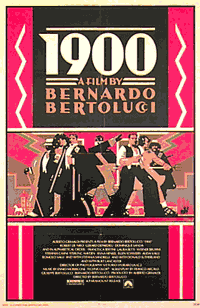
Novecento» is a History book in the shape of a long, superb film: a cast you won't ever forget, a magnificent photography, a soundtrack that compels you to learn all those marvellous songs by heart in Italian, French, whatever…

Dear blogger friends, if you happened not to have watched any of these «crown jewels» of the Seventh Art, I do urge you to do so as soon as possible.

If «European Union» is somehow bound to mean something, then I believe each and every one of us has a clear path to follow: as we visit each other's blogs in the tranquillity of our living rooms or studies, we should visit each other's cultures as often as we can. And by doing so we would become so much richer…

sexta-feira, 29 de setembro de 2006

II. «Sunset Boulevard»

One of my few cult movies…
I remember I was still quite young when I watched it on TV for the first time. And I won't ever forget it was my mother who called my attention to it: «Watch this one tonight. I'm sure you'll enjoy it.» How did she just know?...

My heartfelt homage to the great Billy Wilder and the absolutely magnificent Gloria Swanson.

«Mr. DeMille, I'm ready for my close‑up…»

... Uma obra-prima da Sétima Arte lançada em 1950. Em Portugal, quem não viu - e não se apaixonou perdidamente por - «Crepúsculo dos Deuses»?...

domingo, 10 de setembro de 2006

Pedro Almodóvar's 25-year film list

- Volver (2006) / Return (USA: literal English title)

- La Mala educación (2004) / Bad Education (International: English title)

- Hable con ella (2002) / Talk to Her (International: English title)

- Todo sobre mi madre (1999) / All About My Mother (Europe: English title) (USA) / Tout sur ma mère (France)

- Carne trémula (1997) / En chair et en os (France) / Live Flesh (USA)

- La Flor de mi secreto (1995) / La Fleur de mon secret (France) / The Flower of My Secret

- Kika (1993)

- Tacones lejanos (1991) / High Heels / Talons aiguilles (France)

- ¡Átame! (1990) / Tie Me Up! Tie Me Down! (USA)

- Mujeres al borde de un ataque de nervios (1988) / Women on the Verge of a Nervous Breakdown (USA)

- La Ley del deseo (1987) / Law of Desire (USA)

- Matador (1986) / Matador (USA) / The Bullfighter (literal English title)

- ¿Qué he hecho yo para merecer esto!! (1984) / What Have I Done to Deserve This? (USA)

- Entre tinieblas (1983) / Dark Habits / Dark Hideout

- Laberinto de pasiones (1982) / Labyrinth of Passion (USA)

- Pepi, Luci, Bom y otras chicas del montón (1980) / Pepi, Luci, Bom and Other Girls Like Mom (International: English title)

Just a small treat for you, blogger friends, who have watched a few / some / many / all / of these extraordinary movies…
It would be nice to have some comments on the films you've watched yourselves, wouldn't it? I'd like that very much! Thank you!

Excelente tarde!... / Excellent afternoon!...

Não é novidade para ninguém; se for, é grave!
Estreou em Portugal, na passada Quinta‑feira, o mais recente filme do espantoso realizador castelhano Pedro Almodóvar – «Volver».

Tenho sido um apaixonado pelo cinema deste ser humano maravilhoso desde a tarde em que o conheci, há já uns muito bons anos, e quase rebentei a rir (para escândalo de alguns académicos colegas meus de então) na, à época, ainda mais ou menos selecta sala do «Londres». As razões eram mais que muitas para gargalhar à farta, eu ri a bom rir e, quando o filme acabou, estava mais rouco que afónico.

Ah sim, o filme… «Mujeres al borde de un ataque de nervios». Fabuloso!

Muitos outros títulos se lhe foram sucedendo, cada um com o seu universo próprio sempre de uma estonteante verosimilhança que nunca obsta àquela sensata loucura do quotidiano a que Almodóvar desde cedo nos habituou. É em dosear na perfeição esta mistura que ele é genial.

Desta vez, regressou à sua província natal de Castilla - La Mancha para nos oferecer uma suculenta e deliciosa tranche de vie, através de desempenhos muito bem conseguidos por parte de duas mulheres com M maiúsculo – Penélope Cruz e Carmen Maura.

– Ah mulheres dum caraças!!! Vocês têm o cinema no corpo… pelo menos!

A história, os diálogos, a acção, as reviravoltas da trama, todas as personagens, todas as críticas directas e indirectas, alguma saborosíssima maledicência, a banda sonora, tudo contribui no peso e na medida certos para a existência de mais um sucesso na filmografia almodovariana. Este adjectivo impõe‑se por si. E, quanto ao filme, nada mais revelo…

Meus caros amigos bloguistas de fala portuguesa / de habla castellana! Nada de deixar para amanhã o que devem fazer hoje: para as salas de cinema, e já!

Dear blogger friends!

This post presents my short and humble review of Pedro Almodóvar's latest film «Volver» (Coming Back) – check its beautiful site – and the marvellous performances of two great actresses: Penélope Cruz and Carmen Maura. They're both absolutely fabulous! I've just watched it this Saturday afternoon.

According to «Queer Beacon» (Aug 11, 2006) – get there through my dear friend Augusto (blogroll) – «limited engagement in the USA starts on November 3, 2006.» Don't miss it for anything in the world! You know he has directed some masterpieces we all cherish very much.

Well, as you see, I'm a 200% admirer of his for many years now. Almodóvar is superb!

terça-feira, 15 de agosto de 2006

Sexo e Cinema

Da Diastrófica Anesquintia

– Para uma crítica da escropragia contemporânea
(Tópicos de análise e reflexão)

● Pornografia ou escropragia, imoralidade, amoralidade, privacidade, intimidade, experiências colectivas, publicidade e marketing, revolução e libertação sexuais – aspectos a considerar na reflexão.

● A cinefilia mais popular de sempre – a escroprágica.

● O psiquismo feminino estaticamente dependente de um poderoso dinamismo – o mais longo orgasmo.

● Todo o homem é um sodomita em potência (v. Aristóteles); em acto, há muitos.

● Homem – pénis de aluguer do cinema escroprágico; interveniente secundarizado.

● Ideologias versus práticas, hábitos e tendências sexuais.

● Bandas sonoras – função fática de qualidade geralmente muito questionável.

● Acompanhamento sonoro clássico – enfatização da perenidade do acto sexual.

● Lugares‑comuns norte‑americanos – o início conilingual; o momento lésbico; chiadeiras, ganidelas e berrarias; a d. p. como cúmulo do desempenho; os orgasmos e os close‑ups dos copiosos espargimentos seminais.

● Caricaturas, miniaturas, trombos, varões e vergas – para uma tipologia peniana.

● A obsessão hetero‑anal – inovação criativa ou confissão de alcova?

● Aspecto físico dos protagonistas – evolução na continuidade ou ruptura por contágio com a cinefilia gay; estesias de qualidade superior.

● Gatões depredam ratinhas – nostalgia masculina do poder perdido.

● A cinefilia como voyeurismo intra muros; o exibicionismo do eu.

A ler como guião de análise, crítica e avaliação do cinema dito pornográfico.
(É requerida alguma capacidade intelectual)

segunda-feira, 31 de julho de 2006

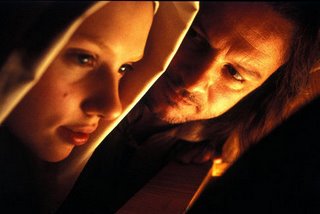
«Girl with a Pearl Earring» (2003)

Scarlett Johansson


Colin Firth


by Peter Webber

Eduardo Serra, director of photography

«Man, this guy must have been hibernating for a rather long time! Just look what the dude's now posting about! Yeah, he's lost it.»

... And so on, and so forth. Well, maybe I was hibernating, maybe I wasn't. For all that matters, that's none of your business, if I may be so blunt.
When it was released I missed it. (That's all you need to know by now.) I could have watched it later on DVD, but as far as cinema is concerned that's not my cup of tea at all. I will always miss the wide, wide screen whenever works of art are at stake. There's nothing I can do about it...
Summer is the right time for movie theatres to go through their archives and surprise us, cinephiles, with masterpieces that won't ever fade away. And this is what happened today as to close the weekend in lavishing beauty. I must thank the gods up above for this opportunity!
A whole lot of subjects, issues, matters, things - you name it - seem to come together in this film: the Golden, 17.th century Netherlands, Dutch painting in general, Rembrandt van Rijn, Jan Vermeer, Delft and its porcelain industry, Dutch tolerance, a grown-up bourgeoise society long before the French Revolution... Jawel, de nederlandse taal ook, though through a magnificent British accent I love so much. All in all, a fascinating journey to Paradise where your eyes get a king's exquisite treatment. Not to forget, that strange feeling as well you're watching the paintings you know as if they all had suddenly gained life! Awesome!

One last remark goes to photography. (Now you're all thinking: «yeah, yeah, we know the guy's Portuguese, you just had to mention him...») Well, I don't know if I had to. I only know I ought to. He does deserve it indeed! I don't think chiaroscuro painting techniques are something you can easily put and show with such artistry on film. Thus a word of apraisal to Eduardo Serra! As for the whole film, congratulations UK!

... And this marvelous weekend came to its end. Writing, blogging, giving especial treats to my eyes, listening to music, chatting, sleeping, eating... turned this weekend into 48 hours to be remembered. As I've said somewhere before, this is what builds up my concept of happiness.

I wish you all a fruitful August's first week. Take care!

quinta-feira, 27 de julho de 2006

A Line Of Beauty To Remember

Our love affair is a wonderous thing
That we'll rejoice in remembering
Our love was born with our first embrace,
And a page was torn out of time and space.

Our love affair
May it always be
A flame to burn through eternity.
So take my hand
With a reverent prayer
That we may live
And we may share
A love affair to remember.

«An Affair to Remember», 1957
Deborah Kerr & Cary Grant

Delicious melody, delicious song, delicious memories...